Reinforces Character Education and PBIS
Students see Trustworthiness, Respect, Responsibility, Fairness, and Caring in action—and leave knowing how to use them.
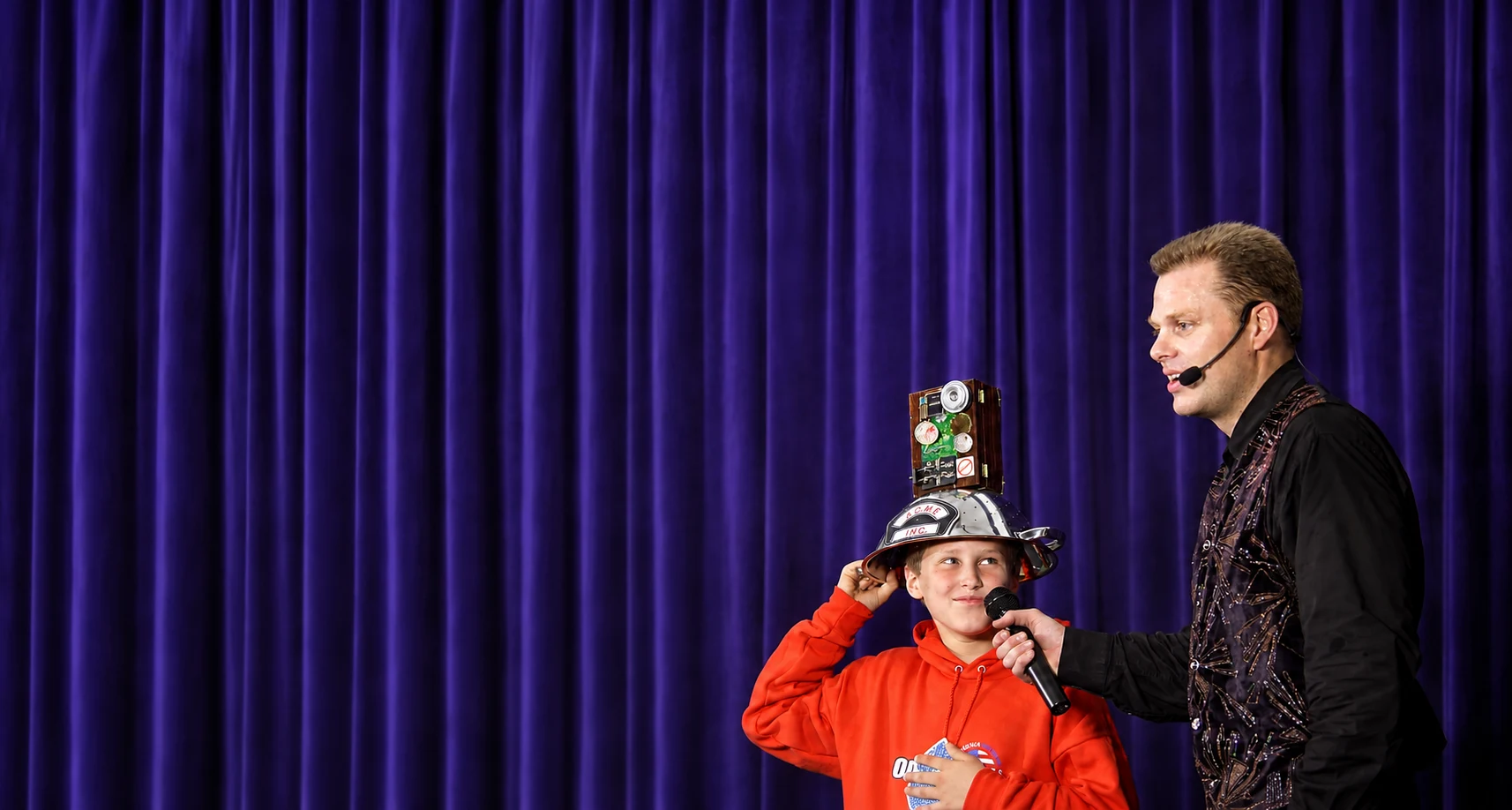
Students see Trustworthiness, Respect, Responsibility, Fairness, and Caring in action—and leave knowing how to use them.
The presentation and routines are adapted for different age groups.
Live, interactive educational magic designed specifically for a school audience.
Southern California School Assemblies • Character Education • PBIS • Trustworthiness • Respect • Responsibility • Fairness • Caring
A character education assembly is a school-wide program that teaches core character principles in one shared experience. The best ones do more than define words like respect or responsibility. They give students a way to use those ideas when a real choice comes up.
The Principles of Character Program is built for that job. It is not a lecture with a few tricks added at the end. The character lesson is interwoven with eye-opening magic, comedy, and student participation, so the whole school hears the same language your staff can keep using afterward.
Children simply learn more when they are interested in what is happening. The Principles of Character Program turns that attention into an opportunity to teach.
Eye-opening magic and comedy capture attention from the beginning of the assembly.
Student interaction keeps the program active, personal, and fun instead of feeling like another lecture.
The educational content reinforces the same character expectations your staff already teaches.
The character message is woven into memorable routines so the lesson and the entertainment reinforce each other.
The Principles of Character Program gives students practical ideas they can understand and use—not just slogans about being good. The assembly is built around a decision-making process and five principles of character.
When students are about to make an important decision, they learn to STOP so they can calm down, THINK of peaceful and responsible solutions, and CHOOSE the best solution based on good character. It gives them something they can remember on the playground—not just while they are sitting in the assembly.
Students learn that trustworthiness means being honest, reliable, and loyal. It means not lying, cheating, or stealing, doing what you say you will do, and having the courage to do the right thing even when nobody is watching.
Respect means treating others the way you would like to be treated. Students learn that hurtful words and actions tear people down, and that good manners, encouragement, and respect for other people's property help build people up instead.
Being responsible means being accountable for your choices, admitting mistakes instead of blaming others, and thinking before you act.
Fairness means playing by the rules, taking turns, sharing, and listening to others. Students also learn not to take advantage of people or use a position of power for an unfair advantage.
Caring means having compassion, helping people who are in need, encouraging classmates who are struggling, forgiving others, and expressing gratitude. Students are reminded that small choices can show people they matter.
This is the distinctive teaching framework of the assembly. Students are encouraged to use it whenever they face an important decision, and to let the five principles of character guide the choice they make.
Calm down before reacting. The first skill is not saying the first thing that comes to mind.
Consider peaceful and responsible solutions. Students are asked to look past the first impulse and picture what could happen next.
Select the best solution based on good character—using Trustworthiness, Respect, Responsibility, Fairness, and Caring as the guide.
Many programs separate the education from the entertainment: talk for a while, then perform tricks—or alternate between tricks and preaching.
The Principles of Character Program takes a different approach. The character ideas are built into the routines themselves, so students are learning while they are laughing, watching, and participating.
Here is one example. Brock holds up a piece of tissue paper and asks students to imagine it is a person. Every time someone is made fun of for how they look, walk, talk, or behave, a piece is torn away. By the end, the paper is in shreds—and the respect lesson is no longer abstract. Students have seen what hurtful words do.
That is what makes the program feel like a magic show to the students while still delivering a clear educational message to your school.
The assembly does not replace your school's existing character education or PBIS program. It gives the entire student body a memorable shared experience that reinforces the same expectations your staff already teach.
Teachers and administrators can refer back to STOP, THINK, and CHOOSE—and to the five principles—when they are coaching a student later in the year. That is the point of a schoolwide assembly: one shared language, not a one-day event that disappears when the lights come back on.
For schools planning for Red Ribbon Week.
Red Ribbon Week • Healthy Choices • CharacterThe Principles of Character Assembly connects naturally with Red Ribbon Week by helping students see how positive choices protect their goals, relationships, reputation, and future.
The program reinforces:
Aviara Oaks Elementary used the Principles of Character Program during Red Ribbon Week:
“Brock came to our school to do 2 magic assemblies during our Red Ribbon Week, and the shows were a huge hit! The kids had so much fun, and the teachers and staff raved about it, too. The tricks were awesome, and the Principles of Character messages that he included were so educational, and applicable to what they were learning in school during Red Ribbon Week. Brock tailored his show to appeal to audiences of all ages.”Kristina L. • PTAAviara Oaks Elementary
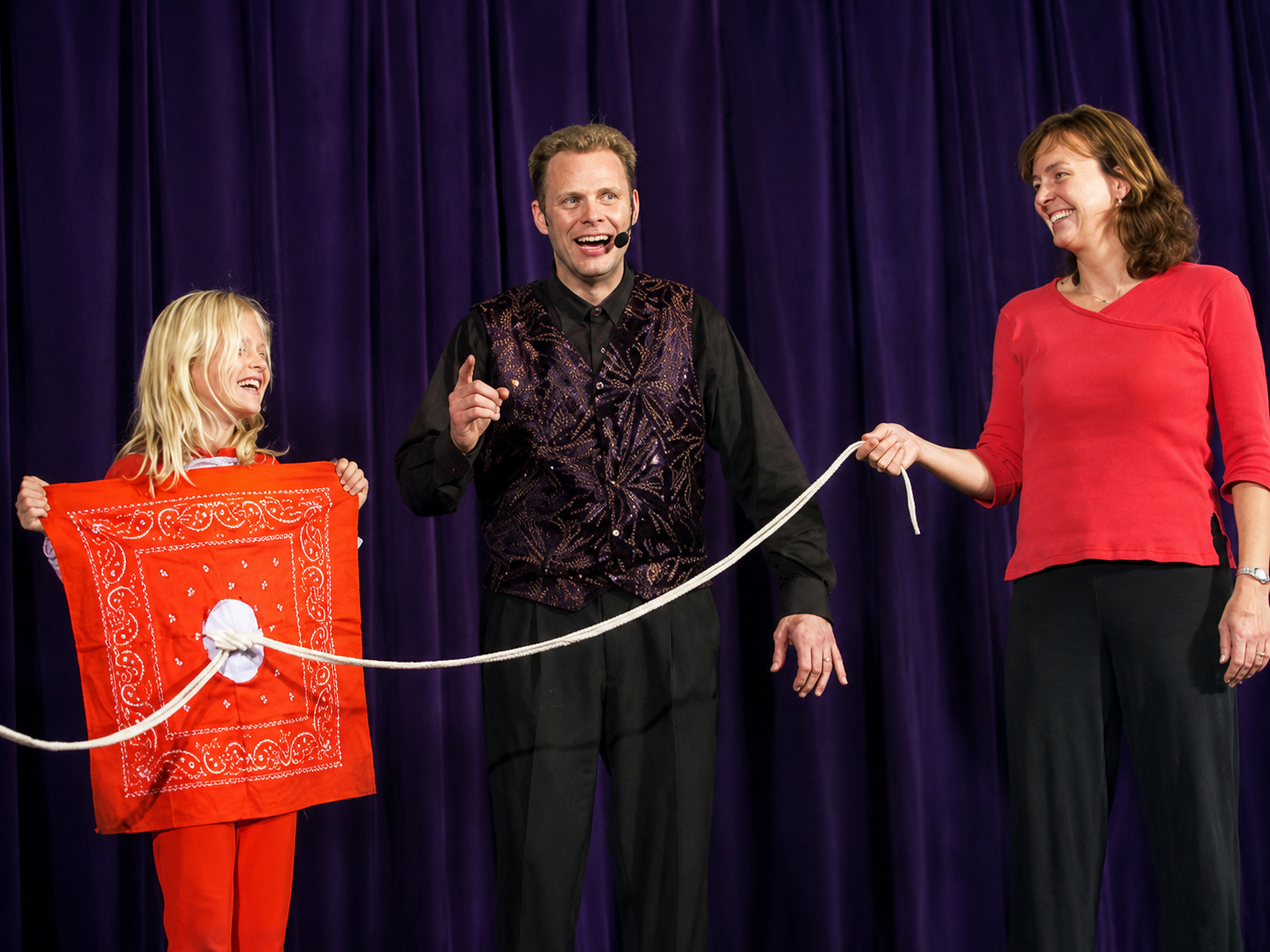
Yes. The Principles of Character Program is designed for grades K–8, and the examples are adapted for the audience.
For younger elementary students, the principles are kept concrete: taking turns, telling the truth, using kind words, and asking for help. For upper elementary and middle school students, the same principles are applied to more independent choices—peer pressure, being loyal to friends without joining in on something wrong, and doing the right thing when no adult is standing nearby.
If you are scheduling more than one assembly on the same day, the program can be adjusted so younger and older students are not given the identical set of examples.
The most important lesson of the assembly is not a list of five words. It is this: character is how you behave when no one is looking.
Students may sometimes be able to get away with lying, cheating, stealing, or making a poor choice without anyone knowing. Good character means choosing to do the right thing anyway.
That is why STOP, THINK, and CHOOSE sits at the center of the program. The five principles give students a standard. The decision process gives them a way to use it when it actually counts.
“Outstanding! I loved the character education assembly. What a wonderful way to get the kids excited and teach them something too!”Kristine P. • PTAVillage View Elementary
“One of the best assemblies I've seen! The teachers LOVED how Brock weaved in the same character traits we teach our students. The students were engaged and excited, but Brock's skill in crowd control made sure it stayed fun and in control.”Susan M. • PrincipalCitrus Glen Elementary
“Brock came to our school to do 2 magic assemblies during our Red Ribbon Week, and the shows were a huge hit! The kids had so much fun, and the teachers and staff raved about it, too. The tricks were awesome, and the Principles of Character messages that he included were so educational, and applicable to what they were learning in school during Red Ribbon Week. Brock tailored his show to appeal to audiences of all ages.”Kristina L. • PTAAviara Oaks Elementary
A school assembly takes students out of valuable classroom time. It should give you more than forty minutes of entertainment.
The Principles of Character Program is a full-length educational assembly designed specifically for school audiences. The comedy and magic make the program fun. The character content gives the fun a purpose.
Brock presents the program for elementary and middle schools throughout Southern California.
If you're considering a character education assembly for your Southern California school, send a few basic details and Brock will follow up with availability and information for your school.
A character education assembly is a school-wide program that teaches core character principles in a single shared experience. The Principles of Character Program uses professional magic, comedy, and student participation to teach Trustworthiness, Respect, Responsibility, Fairness, and Caring, along with a decision-making process called STOP, THINK, and CHOOSE.
It does not replace your PBIS or character education program. It gives every student the same memorable experience and the same language—STOP, THINK, and CHOOSE, plus the five principles—so staff can reinforce those expectations afterward.
Trustworthiness, Respect, Responsibility, Fairness, and Caring. Each one is taught with concrete examples students can understand, not as a poster on the wall.
Students learn to STOP and calm down before reacting, THINK of peaceful and responsible solutions, and CHOOSE the best solution based on good character. It is a process they can use on the playground, in the classroom, and at home.
Yes. The program is designed for grades K–8, and the examples are kept concrete for younger elementary students.
Yes. For older students, the same principles are applied to more independent choices, including doing the right thing when no adult is nearby. If you book more than one assembly, younger and older groups can receive age-adjusted examples.
Approximately 40 minutes. It is a full-length educational program, not a short entertainment set with a message added at the end.
Yes. Many schools schedule two or more assemblies in one day so that group sizes stay manageable and the material can be adjusted by age. Mention that when you request dates.
Brock performs for schools throughout Southern California, including Los Angeles, Orange, San Diego, Riverside, San Bernardino and Ventura counties.
Use the form on this page or call 1-800-700-8996. You do not need every detail finalized. Brock will follow up with availability and pricing for your school.
If character education is one of several themes you are considering, you can also look at the Bully-Free Magic anti-bullying school assembly, Magic of Literature, or Family Nights.
You don't need every detail finalized. Request available dates and pricing for the Principles of Character Program, and Brock will follow up with the information your school needs.
Have a question first? Call 1-800-700-8996 or email Brock.
Enter a few quick details and I'll follow up with availability and pricing information.
No obligation, and Brock will never share your information with anyone.